Parking lot striping · Michigan
Fresh lines give you your spaces back.
When drivers cannot see where a stall ends, they take two. Faded lines quietly shrink a lot that you are already paying taxes and upkeep on.
What goes on a lot
Every mark on the ground, priced as its own line.
You get an itemized number rather than one figure with no working shown. If you only want half of this, say so and I will price half of it.
Standard stalls
Single or double line, straight or angled, to whatever the lot was laid out for.
ADA stalls
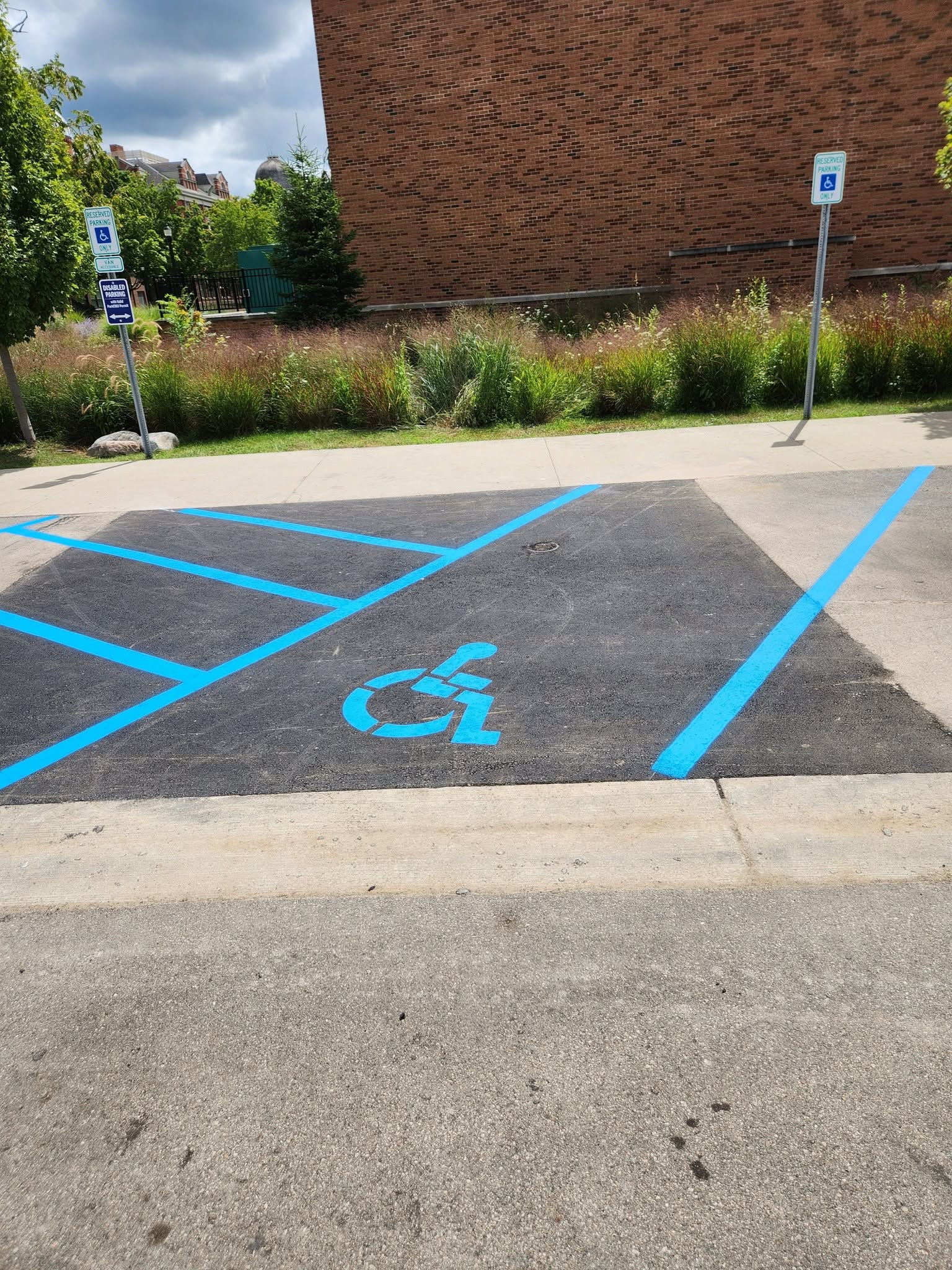
Accessible spaces, access aisles, blockout hatching and the current-spec symbol.
Fire lanes
Curb and pavement marking, plus lettering where the fire marshal wants it.
Arrows & direction
Traffic arrows, one-way markings and stop bars to keep the flow the way it was designed.
Crosswalks
Ladder or standard, sized to the door they actually lead to.
Loading & no-parking
Loading zones, no-parking hatching and reserved areas.
Stall numbering
Numbered or lettered spaces for assigned parking and multi-tenant buildings.
Curbs & blocks
Concrete curb, asphalt curb and parking blocks, quoted separately from the lines.
Two different jobs
Re-stripe, or start from nothing.
These price differently and take different amounts of time, so it is worth knowing which one you have before you ask anyone for a number.
Re-stripe — the lines are still readable
- Faded but visible layout to follow
- Faster, and the cheaper of the two
- Same stall count, same flow, nothing to relearn for your tenants
- Right after a sealcoat, since the seal hides everything
- The usual answer for a lot that just looks tired
New layout — nothing left to follow
- Freshly paved, or worn past the point of reading
- Laid out from plans, or from historical imagery of the lot
- Measured and chalked before any paint moves
- The chance to fix a flow that never worked properly
- Takes longer, because the layout is most of the work
How it is priced
Priced by the line, every time.
Square footage is the wrong unit for striping. A big empty lot with sixty stalls is less work than a tight one with a hundred and twenty, so I count what actually gets painted.
- Stall countThe main driver. Every stall is a set number of lines.
- ADA spacesAccess aisles and blockout hatching are far more paint than a standard stall.
- StencilsArrows, lettering, accessibility symbols and fire-lane marking, counted individually.
- Curbs and blocksPriced by length, separate from the lines, and listed out so nobody is guessing what was included.
- ConditionA layout I can follow costs less than one I have to rebuild.
- AccessOvernight or weekend work on a lot that cannot close during trading hours.
There is a job minimum, so a handful of stalls and a small lot land in roughly the same place. If the job is small, it is usually worth doing the rest of the lot while I am there.
Getting a number
Four things, and no site visit.
01
The address. That is genuinely enough to start, because I can pull the lot up and count it.
02
Whether the existing lines are still readable, or whether it has been repaved.
03
Anything you want changed. More spaces, different flow, a reserved row.
04
When the lot can be off-limits, and for how long.
Timing
Paint needs dry ground and a warm night.
Striping is weather work. The pavement has to be dry and warm enough for paint to bond, which in Michigan means a season rather than a calendar year. Booking early in it is the difference between a date and a waiting list.
If it rains, you get a call in the morning with a new date. Not a no-show. One wet night pushes several days of work down the line, so the honest thing is to tell you rather than let you find out.
Most lots are done overnight and open on time. You are not closing for a day.
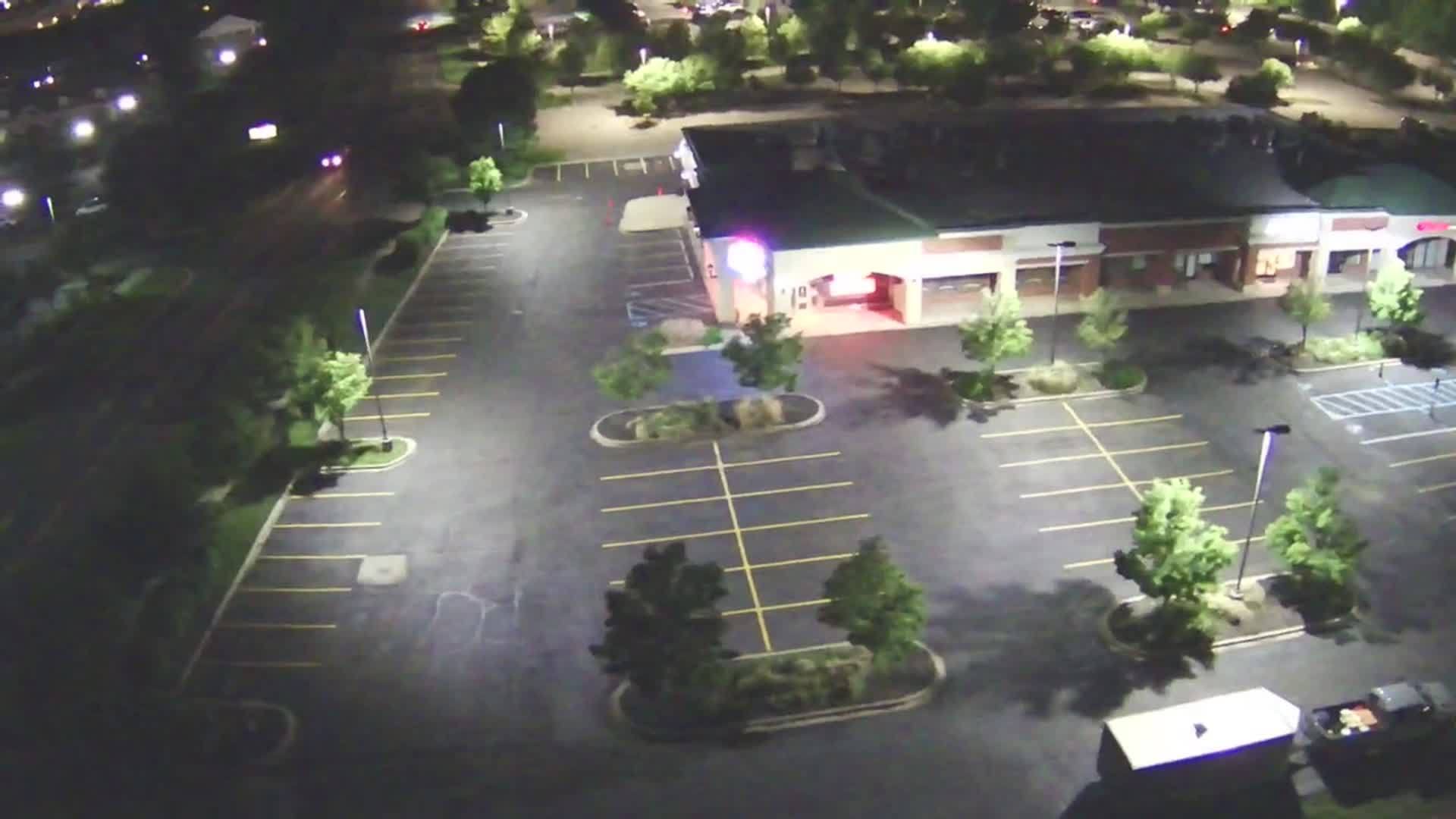
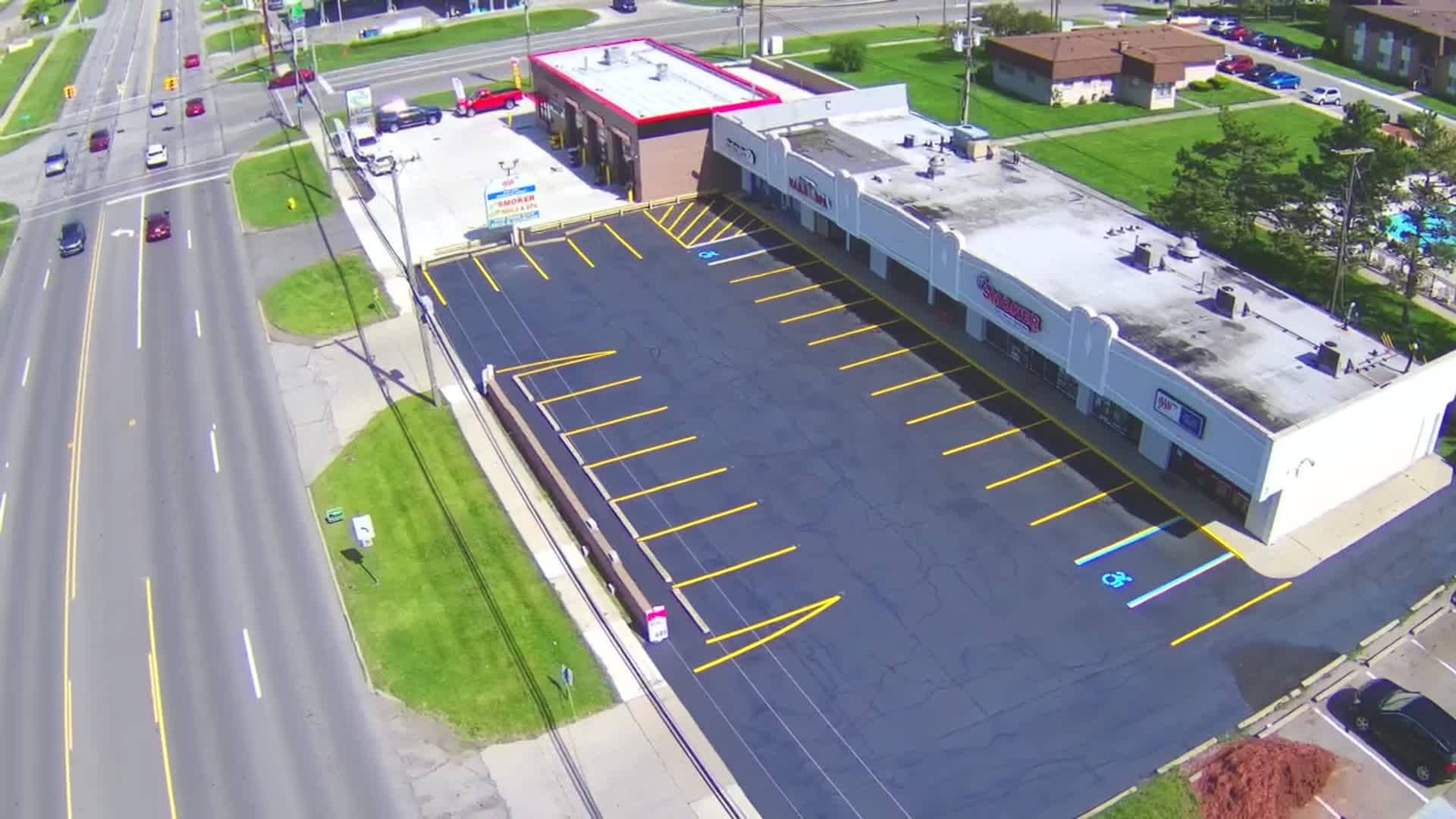
Recent lots
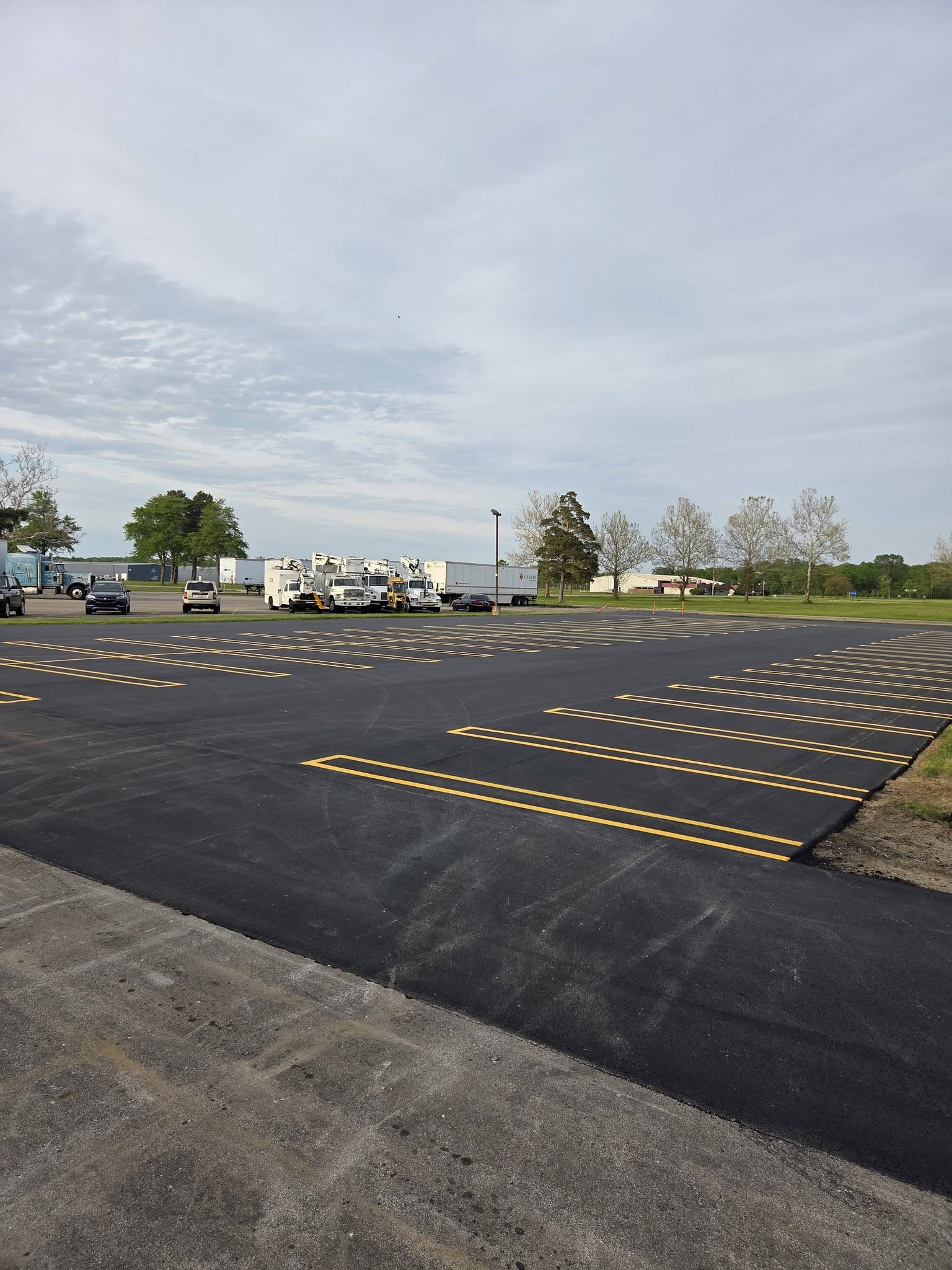
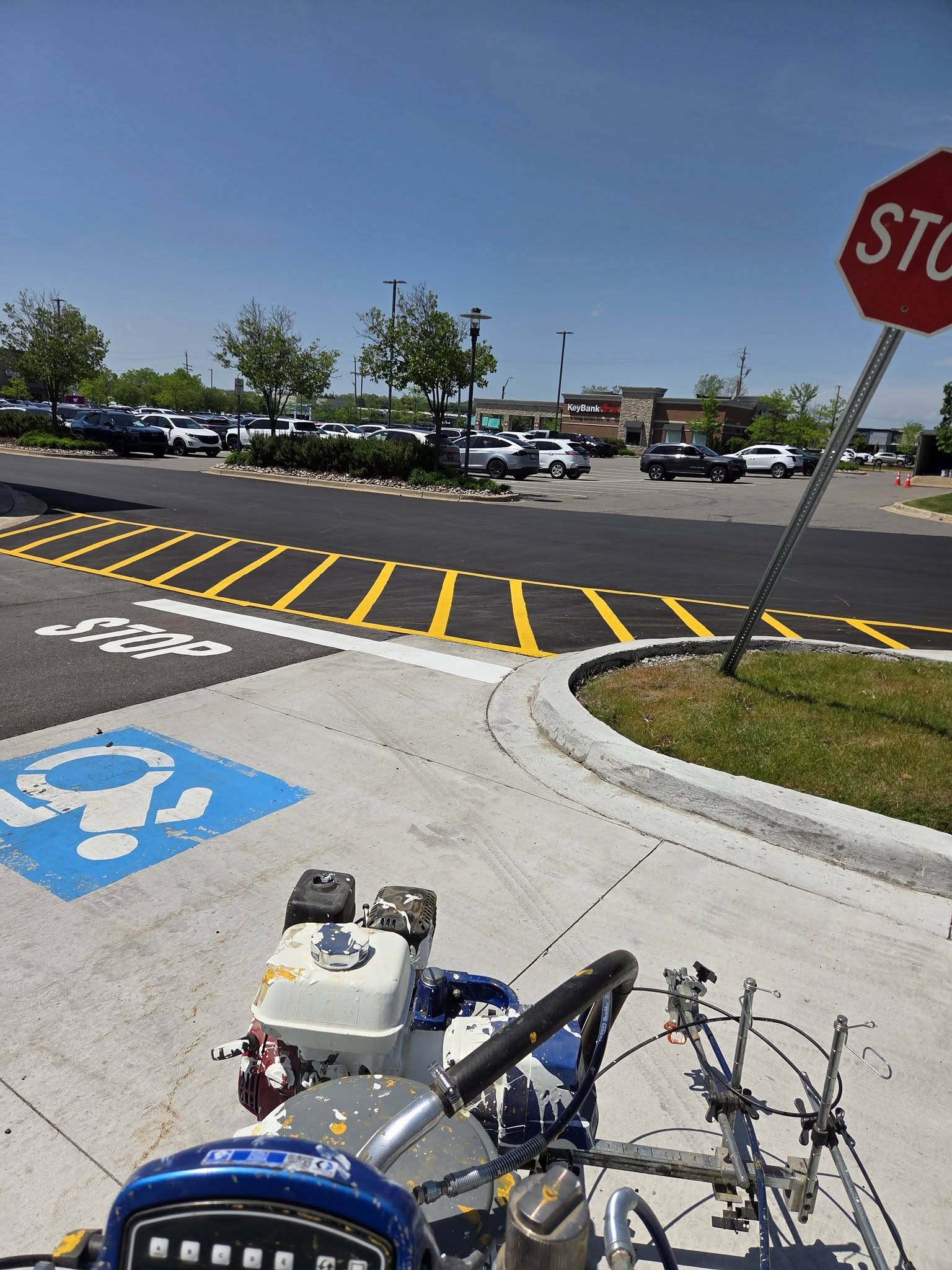
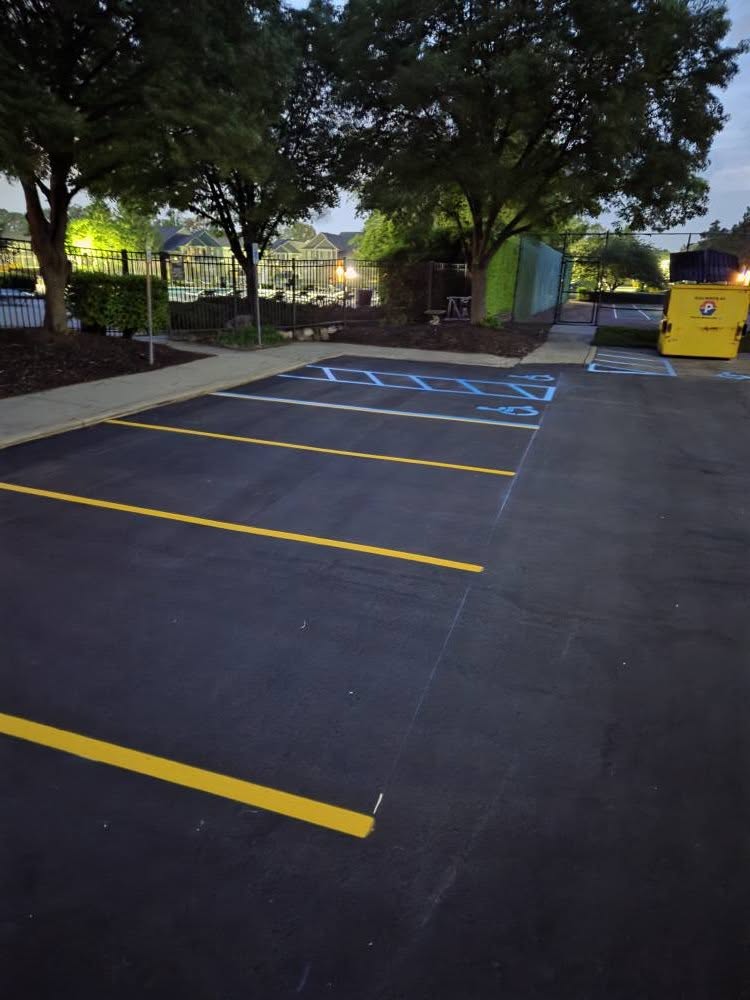
Lots finished around the state.
Questions I get asked
Questions I get most weeks.
How often does a lot need re-striping?
It depends far more on traffic and winter than on the calendar. A busy retail lot that gets ploughed every winter wears faster than an office lot that sits still. The practical test is whether a driver can tell where the stall ends from inside the car. If they cannot, you are already losing spaces.
Can you paint straight over the old lines?
If the layout is still readable and you are keeping it, yes, and that is the cheaper job. If the lines are gone or you want the layout changed, it becomes a fresh layout, which means measuring and chalking before any paint moves.
Is my accessible parking still up to standard?
The old accessibility symbol is out of spec, so if that is what is on your lot I will tell you before I paint it back on rather than after. I mark to the current symbol, with proper access aisles and blockout hatching. Required space counts are set by the code your building falls under, so confirm those with your local authority. I am the striper, not your compliance consultant.
Do I have to close the lot?
Usually only a section at a time, and usually overnight. Most lots get striped after close and are open again the next morning. Tell me the hours you cannot lose and I will work around them.
What time of year can you stripe in Michigan?
Roughly the warm half of the year. Paint needs dry pavement and enough warmth to bond properly, so once the cold sets in the season is done. The calendar fills from the front, so early is better than late if you have a date that matters.
Can you quote without coming out?
Yes, and most of the time that is exactly how it goes. Send an address and I will pull the lot up and count it. Layouts rarely change once a building has been permitted, so what is in the imagery is usually what is on the ground.
Do you sealcoat as well?
No. I line, and that is on purpose. Several sealcoat contractors send me their striping, and I am not about to start quoting against them. If your lot needs sealing first, get that booked and I will line it once it has cured.
Where do you work?
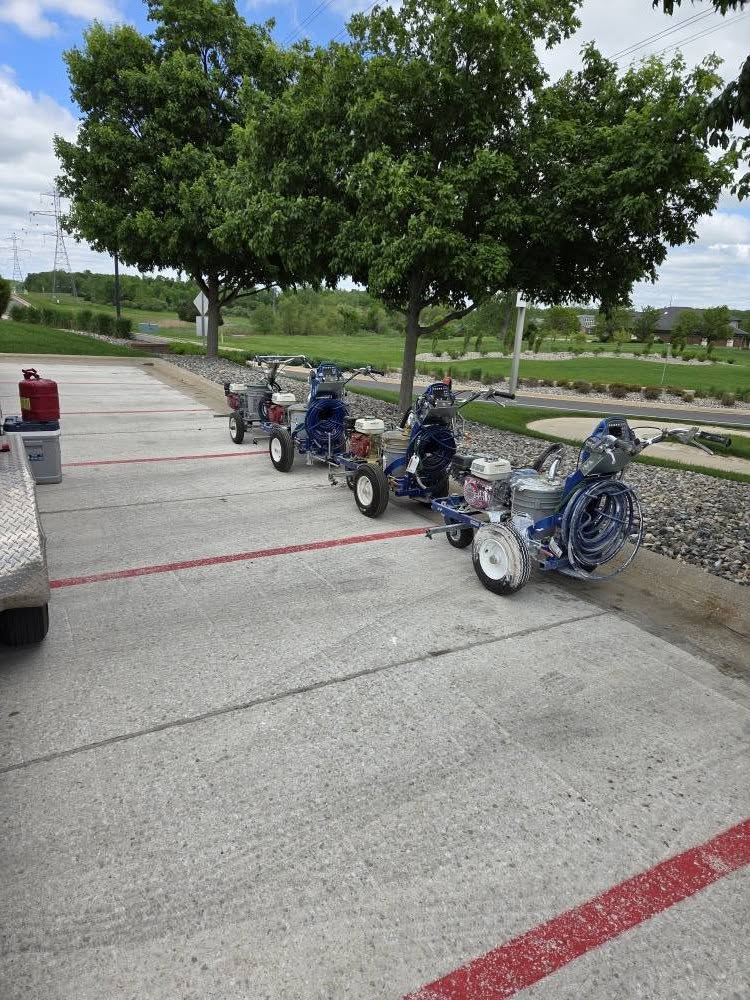
Anywhere in Michigan. Ann Arbor, Detroit, Kalamazoo, Grand Rapids and Midland are all regular runs, and the trailer is set up to be away from home.
Nordic Lines LLC
Tell me where the lot is.
An address is enough to start. I pull it up, count it, and give you a number.
(734) 624-4164Call or text. If I am running a machine, I call back in the morning.